Zariaspa and the “Kunduz” Hoards
Keywords:
Ptolemaios, cartography, Baktria, Zariaspa, Alexander, Khisht Tepe, Indo-Greek coinage in Attic standardAbstract
Ptolemy’s Geography contains extensive data on Bactria, the land above the Hindu Kush and south of the Oxus (Amu Darya). A comparison of his data with the events surrounding Alexander’s Anabasis has revealed contradictions regarding the locations of rivers and cities. The most significant difficulty concerned the location of a river called Ochus (Ωχος). We propose leaving the Ochus where Ptolemy knew it, namely as Balkhāb near Balkh. Furthermore, the city of Zariaspa is not considered a second name for Balkh, but is placed on the Oxus, south of Kobadian, following Ptolemy. A review of other places and rivers reinforces the impression that Ptolemy’s map of Bactria and the surrounding countries must be taken more seriously. If Zariaspa is located on the Oxus, then Alexander spent the winter of 329/328 BC there for military reasons. The imprisonment and possible execution of the last Achaemenid king, Bessus (Artaxerxes), at this location adds to the mythical character of the place where Alexander demonstrated his final conquest of the country.
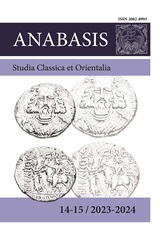
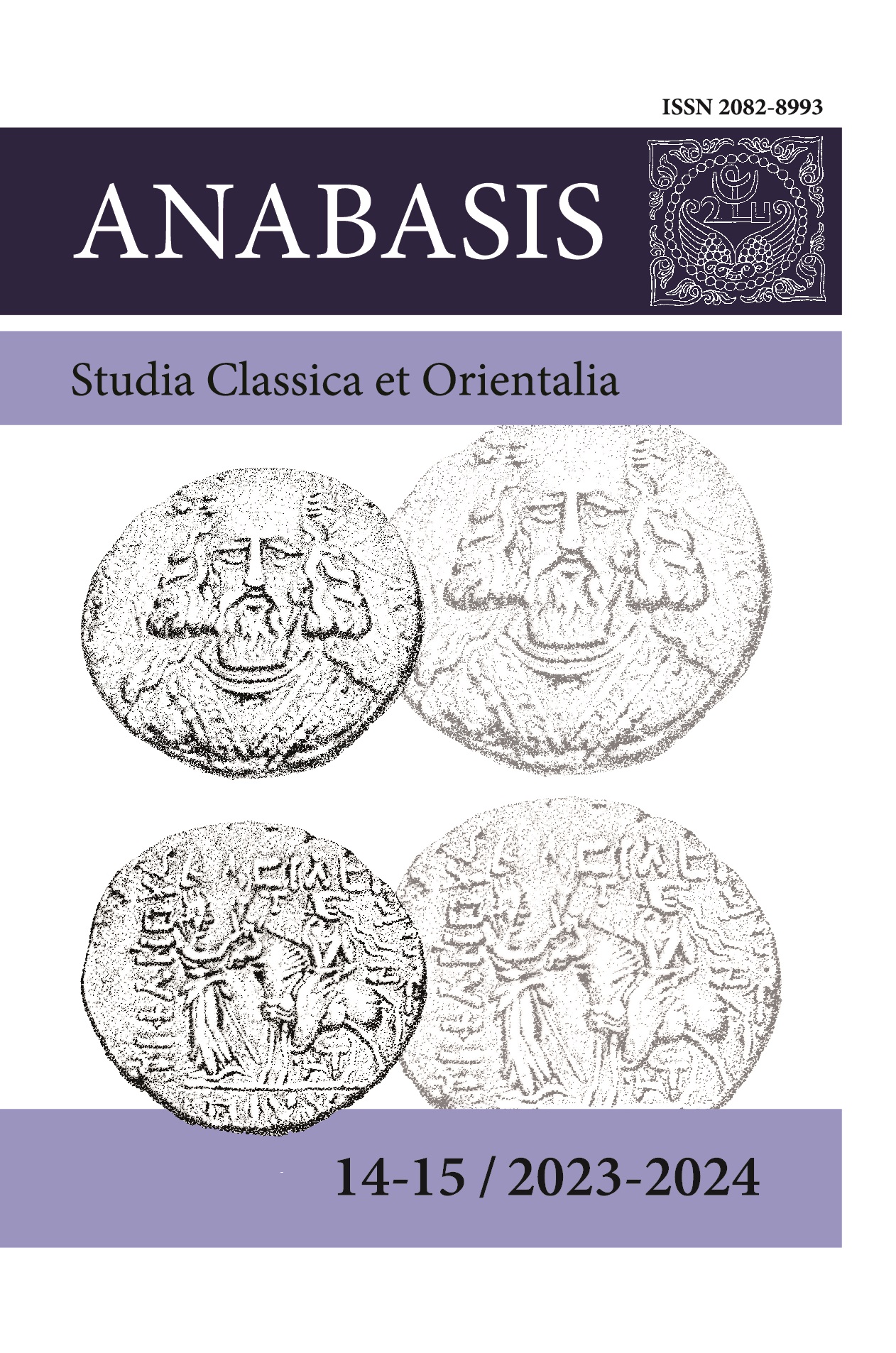
It appears that Zariaspa, or a temple within it, represented Alexander’s presence, and that donations to the temple conferred legitimacy on all subsequent rulers throughout the Bactrian region. Under the controversial rulers Eucratides I, II, and Heliocles I, particularly large donations were made to the temple treasury. After the Yuezhi also conquered Bactria south of the Oxus, the non-Bactrian Indo-Greek rulers minted special coins with their portrait in the Attic style, which were donated almost exclusively in Zariaspa. A connection to Alexander could explain the rarity and numismatic peculiarity of the donations.
Downloads
Published
How to Cite
Issue
Section
License
Copyright (c) 2025 Anabasis. Studia Classica et Orientalia

This work is licensed under a Creative Commons Attribution-NonCommercial-NoDerivatives 4.0 International License.