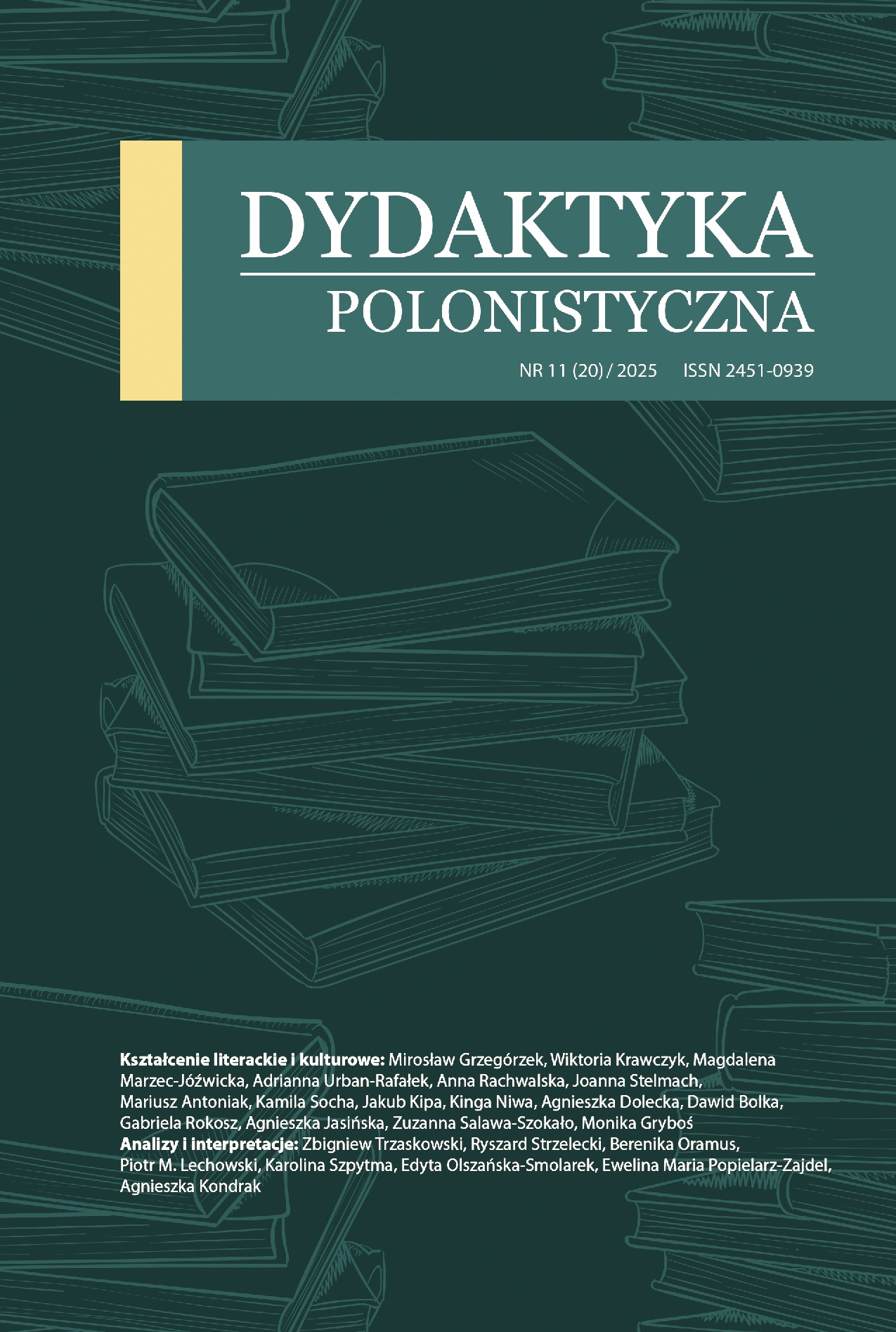
Body and Gesture in the Culture of the Early Polish–Lithuanian Commonwealth. Customary Communication and Linguistic Representations
DOI:
https://doi.org/10.15584/dyd.pol.20.2025.22Keywords:
body, gesture, customary communication, noble culture, Polish–Lithuanian Commonwealth, early modern Polish language, Polish language educationAbstract
The article examines the body and gesture as key elements of customary communication in the noble culture of the early Polish–Lithuanian Commonwealth. Gesture is analysed not as a spontaneous emotional expression but as a ritualised cultural code governed by social, religious and ceremonial norms. The discussion focuses mainly on the sixteenth and seventeenth centuries, with selected eighteenth-century examples illustrating the persistence of these practices. The analysis is based on memoirs and descriptive sources, including the writings of Jan Chryzostom Pasek, Jędrzej Kitowicz and foreign observers such as Karol Ogier. These texts reveal the close relationship between gesture and language, as well as the role of non-verbal communication in shaping social hierarchy and the theatricality of Baroque culture. The article also highlights the didactic value of early modern sources for Polish language education.
Downloads
Downloads
Published
How to Cite
Issue
Section
License
Copyright (c) 2025 Dydaktyka Polonistyczna

This work is licensed under a Creative Commons Attribution-NonCommercial-NoDerivatives 4.0 International License.
 Visit us on Instagram