Archives
-
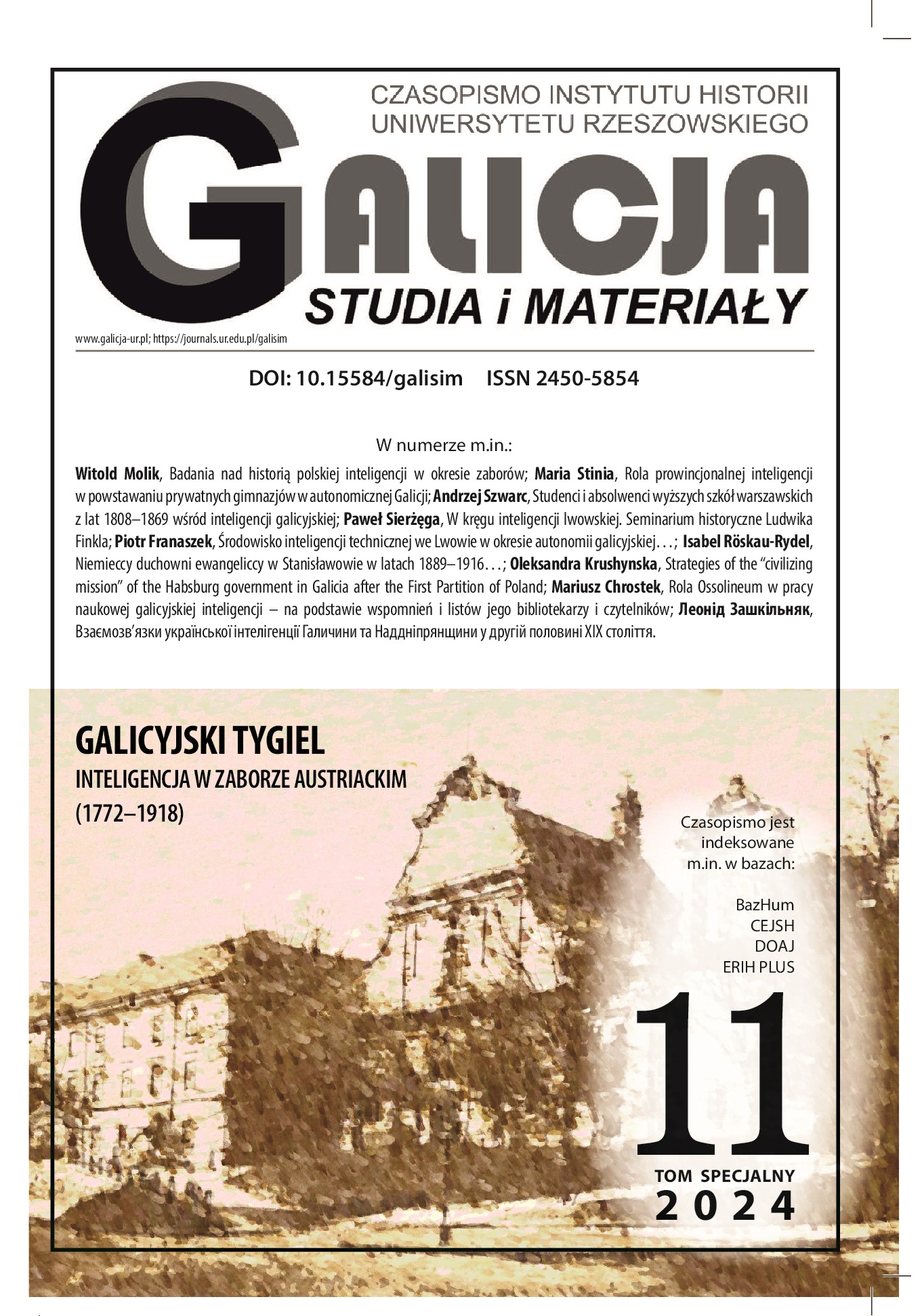
special edition: Galician Melting Pot. Inteligentsia in the Austrian partition (1772-1918)
Vol. 11 (2024)The current issue includes inter alia:
Witold Molik, Research on the history of Polish intelligentsia during the partition period
-ORIGINS of INTELLIGENTSIA
-
Maria Stinia, The role of provincial intelligentsia in the establishment of private grammar schools in autonomous Galicia
-
Andrzej Szwarc, Students and graduates of Warsaw schools from 1808 to 1869 among Galician intelligentsia
-
Paweł Sierżęga, In the circle of Lviv intelligentsia. Ludwik Finkel’s historical seminar
- FACES OF GALICIAN INTELLIGENTSIA
-
Piotr Franaszek, The milieu of the technical intelligentsia in Lviv during the period of Galician autonomy. The Polytechnic School and the Polytechnic Society
-
Isabel Röskau-Rydel, German Evangelical clergy in Stanislawów from 1889 to 1916. From missionary activity among the Jews to work for the Evangelical Diaspora in Galicia
- CIVILISING MISSION
-
Krzysztof Broński, The role of the intelligentsia in the formation of economic culture in Galicia in the 2nd half of the 19th century – an outline of the issue
-
Mariusz Chrostek, The role of Ossolineum in the scientific work of the Galician intelligentsia – based on the memories and letters of its librarians and readers
-
-
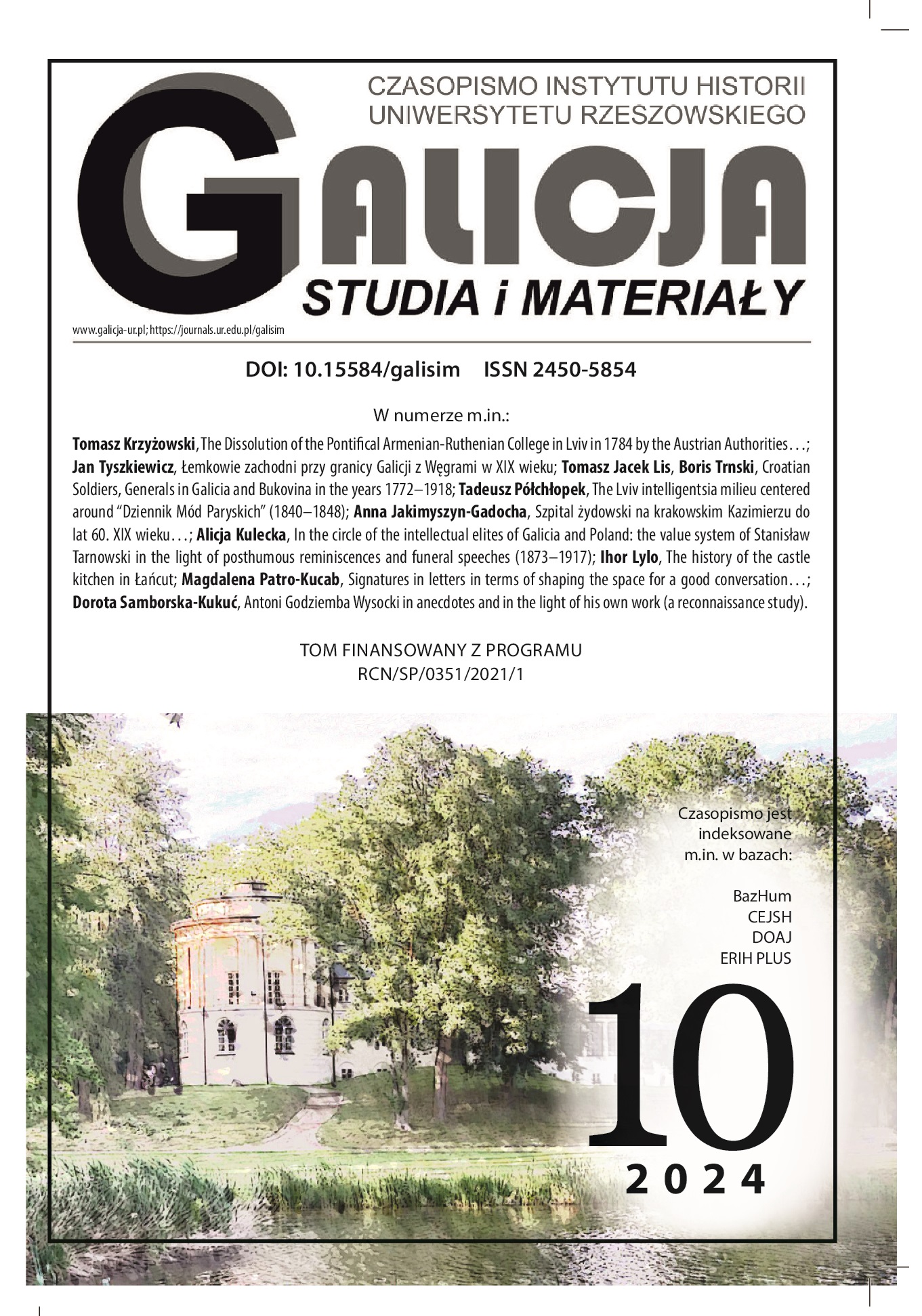
Vol. 10 (2024)
The current issue includes inter alia:
- Papers and dissertations
- Tomasz Krzyżowski, The Dissolution of the Pontifical Armenian-Ruthenian College in Lviv in 1784 by the Austrian Authorities: Origins, Process, Consequences
- Jan Tyszkiewicz, Łemkowie zachodni przy granicy Galicji z Węgrami w XIX wieku
- Tomasz Jacek Lis, Boris Trnski, Croatian Soldiers, Generals in Galicia and Bukovina in the years 1772–1918
- Tadeusz Półchłopek, The Lviv intelligentsia milieu centered around “Dziennik Mód Paryskich” (1840–1848)
- Anna Jakimyszyn-Gadocha, Szpital żydowski na krakowskim Kazimierzu do lat 60. XIX wieku (od „hekdeszu” do nowoczesnej placówki leczniczej)
- Alicja Kulecka, In the circle of the intellectual elites of Galicia and Poland: the value system of Stanisław Tarnowski in the light of posthumous reminiscences and funeral speeches (1873–1917)
- Sources and materials
- Ihor Lylo, The history of the castle kitchen in Łańcut
- Magdalena Patro-Kucab, Signatures in letters in terms of shaping the space for a good conversation (based on the private correspondence of Alojzy Feliński)
- Dorota Samborska-Kukuć, Antoni Godziemba Wysocki in anecdotes and in the light of his own work (a reconnaissance study)
If different language versions of an article are available, the English version should be cited (the English version is considered the primary version).
-
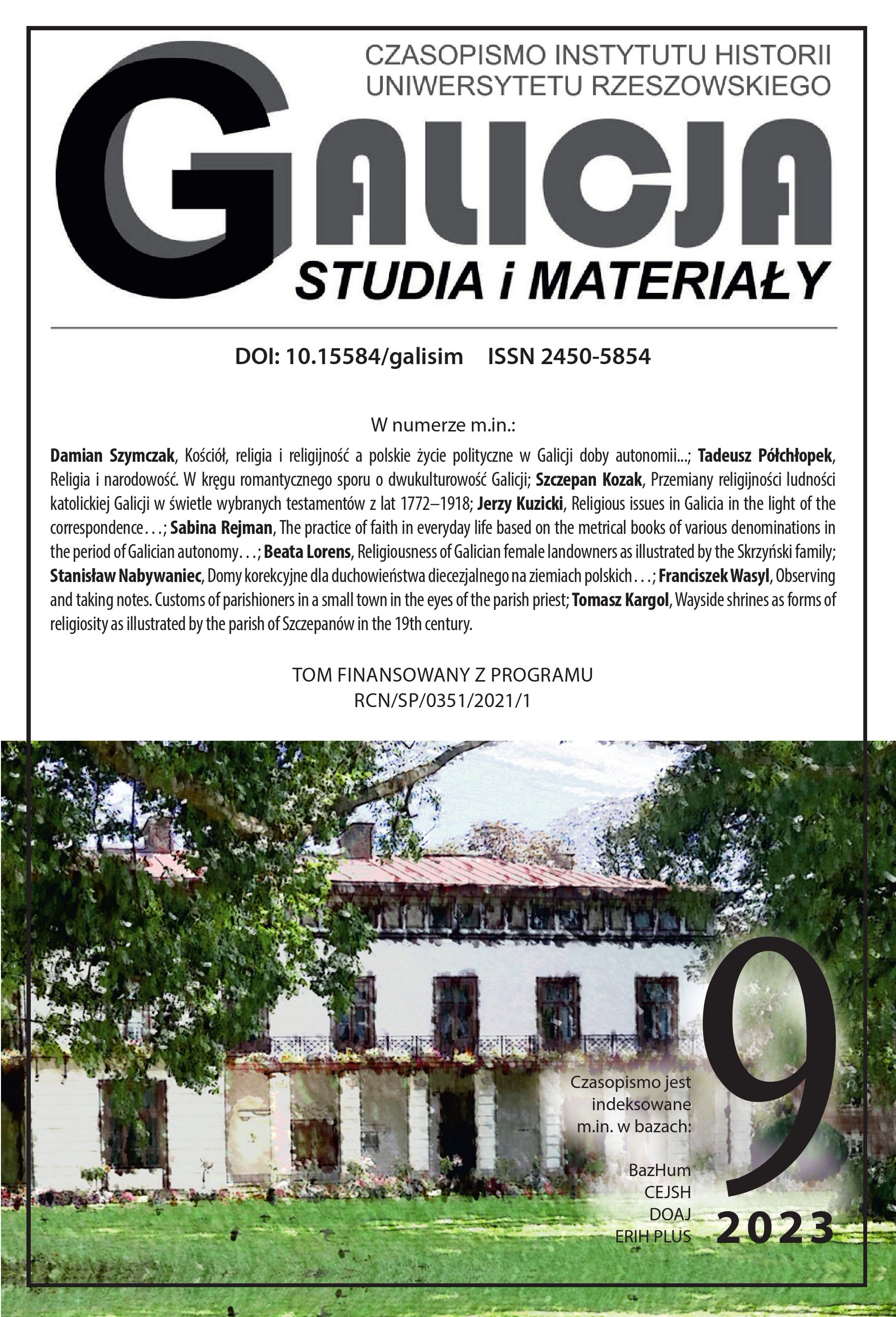
Vol. 9 (2023)
The current issue includes inter alia:
- Papers and dissertations
-
Damian Szymczak, Church, religion and religiosity with regard to Polish political life in Galicia in the era of autonomy. State of the research and research postulates
-
Tadeusz Półchłopek, Religion and nationality. In the scope of the romantic dispute about the biculturalism of Galicia
-
Sabina Rejman, The practice of faith in everyday life based on the metrical books of various denominations in the period of Galician autonomy (as illustrated by Rzeszów)
-
Michał Sowa, Attitudes of selected diocesan clergy and religious order members to- wards the outbreak and the first months of World War I
-
Jolanta Załęczny, “To act and operate socially, it is necessary in advance to know the ways and goals, to have calculations and programs.” About the various levels of activity of Armenian Archbishop Józef Teodorowicz
-
Tomasz Kargol, Wayside shrines as forms of religiosity as illustrated by the parish of Szczepanów in the 19th century
-
Katarzyna Thomas, Selected religious aspects of the development of the Jewish com- munity of Drohobycz in the last years of the Habsburg Monarchy
- Sources
-
Mariusz Nowak, The problem of so-called “traditional values” and socio-political transformations in 19th-century Europe in the light of the journalism of the Kraków conservative, Henryk Lisicki
If different language versions of an article are available, the English version should be cited (the English version is considered the primary version).
-
-
Filozofia w Galicji III
No. 8 (2022)The current issue includes inter alia:
- Papers and dissertations
- Anna Słoniowska, Benedykta Dybowskiego program odrodzenia ludzkości
- Beata Guzowska, „Religia przyszłości” Maurycego Straszewskiego w perspektywie współczesnych przemian religii i religijności
- Paweł Balcerak, Status możliwości w logice trójwartościowej Jana Łukasiewicza
- Robert Lewandowski, Etyka społeczna w ujęciu Jana Piwowarczyka
- Stefan Konstańczak, Pomiędzy tradycją a filozofią analityczną. Karola Frenkla (1891–1920) droga do etyki naukowej
- Anna Drabarek, Problem tożsamości filozofii w koncepcjach przedstawicieli szkoły lwowsko-warszawskiej oraz ich krytyków
- Wojciech Słomski, Tadeusz Czeżowski – obszary filozofowania
- Sources
- Agnieszka Fluda-Krokos, Stare druki pozyskane do Biblioteki Książąt Czartoryskich z leżajskiego klasztoru oo. Bernardynów w świetle spisu z roku 1875
-
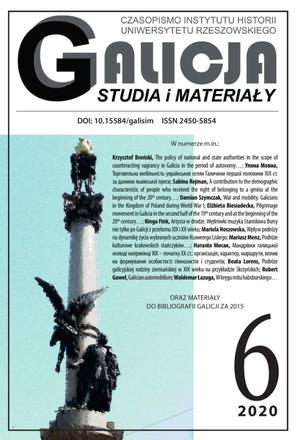
No. 6 (2020)
This publication was subsidized by the Support for Scientific Journals Programme (Contract no. 374/WCN/2019/1)
-
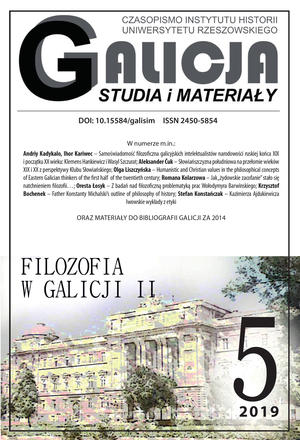
Filozofia w Galicji II
No. 5 (2019)This publication was subsidized by the Support for Scientific Journals Programme (Contract no. 374/WCN/2019/1)
-
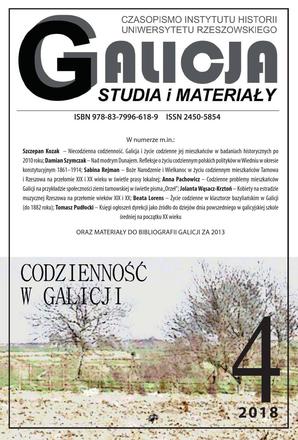
Codzienność w Galicji
No. 4 (2018)Annual volume issued by the Institute of History at the University of Rzeszów
-
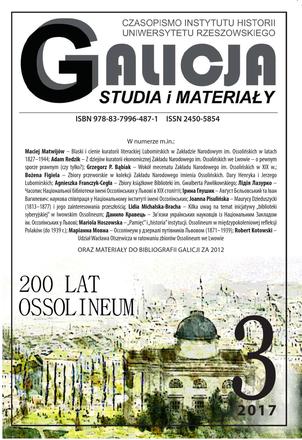
200 lat Ossolineum
No. 3 (2017)Annual volume issued by the Institute of History at the University of Rzeszów
-
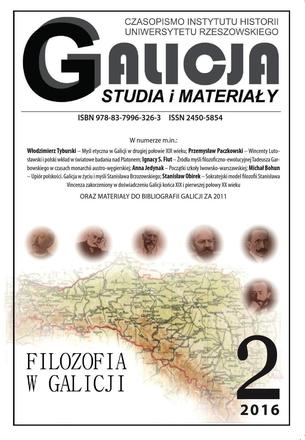
Filozofia w Galicji
No. 2 (2016)Annual volume issued by the Institute of History at the University of Rzeszów