EDITORIAL BOARD AND EDITORIAL OFFICE ADDRESS
EDITOR-IN-CHIEF
Dr hab. GRAŻYNA RYBA, prof. UR, University of Rzeszów, Poland
ORCID: https://orcid.org/0000-0002-6920-4613
E-MAIL: gryba@ur.edu.pl
PHONE: + 48 661 928 362

She completed her studies in art history at the Institute of Art History of the Jagiellonian University in Krakow and her bachelor's and doctoral studies organised by the Pontifical Academy of Theology in Krakow. She prepared her doctoral dissertation under the supervision of Fr. Prof. Dr. Józef Benignus Wanat. She obtained her doctoral degree in the humanities in the discipline of art sciences at the Institute of Art Sciences of the John Paul II Catholic University of Lublin. She is employed at the Institute of Fine Arts of the University of Rzeszów as a professor at UR.
She initiated the creation, organised and directs the work of the Centre for Documentation of Contemporary Sacred Art at the University of Rzeszow. She founded and edits the yearbook Sacrum et Decorum. Materials and Studies on the History of Sacred Art.
In the course of her teaching work, she has promoted about 120 master's and bachelor's theses. She has organised 13 national scientific conferences. She was awarded the Second Degree Prize by the Rector of the University of Rzeszów for outstanding and creative organisational achievements and the Medal of National Education at the request of the Main Committee of the Artistic Olympiad for her achievements in working with Olympians. Her research interests focus on issues related to contemporary art, primarily sacred and religious art. She is the author of numerous publications on these topics.
EDITORIAL SECRETARY:
AGNIESZKA IWASZEK, Msc, University of Rzeszów, Poland
ORCID: https://orcid.org/0009-0009-7124-2238
E-MAIL: sacrumetdecorum@ur.edu.pl
PHONE: +48 17 872 12 58

BIO:
Agnieszka Iwaszek, historian (Jagiellonian University, 2009), language editor (University of Warsaw, 2011), columnist (Niedziela, Tygodnik Powszechny), author of dozens of articles on historical and social topics, social activist with the World Association of Home Army Soldiers (2011–2017), the Polish Association of Former Political Prisoners of Nazi Prisons and Concentration Camps (2011–), and a Trusted Representative of the Maximilian-Kolbe-Werk (2017–). She also completed postgraduate studies in art history at the Institute of Art History of the Polish Academy of Sciences. Since 2023, she has been the editorial secretary of the annual journal Sacrum et Decorum. She is responsible for establishing and maintaining international cooperation, including with: members of the journal’s Programme Council, affiliated editors, reviewers and article authors. She is in charge of the linguistic editing of the Polish edition of Sacrum et Decorum and coordinates the work of the editorial board. She creates and edits the journal’s website and manages its social media profiles. For her work in preserving the memory of the struggle for the independence of the Republic of Poland, she was awarded the ‘Pro Patria’ Medal (2015) as well as Polish and German trade union honours.
TOMASZ SZYBISTY, Ph.D., University of the Commission of National Education in Krakow, Poland
E-MAIL: tomasz.szybisty@up.krakow.pl
ORCID: https://orcid.org/0000-0002-6047-5716
BIO:
Graduated in art history from the Institute of Art History of the Jagiellonian University in Krakow. In 2010 he defended his doctoral thesis on ‘Nineteenth-century stained glass windows of the churches and chapels of Cracow’. He works as an assistant professor in the Department of History and Culture of the Countries of the German Language Area at the University of the Commission of National Education in Krakow. He belongs to the following associations: Association of Polish Germanists, Corpus Vitrearum Medii Aevi, Association of Art Historians, Association of Stained Glass Enthusiasts ‘Ars Vitrea Polona’. He is the author or co-author of numerous scientific publications.
Scientific interests: art and literature of the 19th century, stained-glass painting
AFFILIATED EDITORS
MARCO DANIEL DUARTE, Academia Nacional de Belas Artes, Portugal https://orcid.org/0000-0001-9211-9671
BIO:
Marco Daniel Duarte is director of both the Museum of the Shrine of Fátima and the Academy of Studies of the same religious institution, where he manages the Archive and Library. He also directs the Cultural Heritage Department of the Diocese of Leiria-Fátima. Holding a PhD in Art History from the Faculty of Arts and Humanities of the University of Coimbra, he belongs to various Portuguese and foreign academies (Brazil and Vatican). His scholarly output includes several books and multiple museum exhibitions.
JASON GORONCY, Whitley College, University of Divinity, Australia https://orcid.org/0000-0001-6837-6168
BIO:
Jason Goroncy is Associate Professor of Theology at Whitley College, University of Divinity, Australia. His research and teaching explore the intersections of Christian theology with the arts, public life, Reformed traditions, and the diverse cultures and histories that shape contemporary Australia and the wider world. Across this work, he is especially interested in the ways Christian theology is formed, challenged, and enlivened through encounters with cultural difference, artistic practice, political life, experiences of trauma, and questions of justice, hope, and the common good.
He teaches and supervises across Christian doctrine, theological ethics, public theology, trauma theology, and theology and the arts. His work is marked by an interdisciplinary approach to theological inquiry and by a concern for theology as a public and culturally situated practice, attentive to the particular places, communities, histories, and imaginative worlds in which Christian faith is lived and articulated.
His recent books include T&T Clark Handbook of the Doctrine of Creation (Bloomsbury, 2024) and, with Rod Pattenden, Imagination in an Age of Crisis: Soundings from the Arts and Theology (Pickwick, 2022). Earlier publications include Hallowed Be Thy Name: The Sanctification of All in the Soteriology of P. T. Forsyth (T&T Clark, 2013), Descending on Humanity and Intervening in History: Notes from the Pulpit Ministry of P. T. Forsyth (Pickwick, 2013), and Tikkun Olam: To Mend the World: A Confluence of Theology and the Arts (Pickwick, 2014).
His wider theological interests are animated by questions about what it means to do God-talk amid cultural plurality, ecological crisis, political fracture, historical trauma, and the imaginative possibilities opened by art.
SOFIA KOROL, National Academy of Sciences of Ukraine, Ukraine
https://orcid.org/0000-0001-6763-4938
BIO:
In 1996, she graduated from the Faculty of Art History and Theory at the Lviv National Academy of Fine Arts, and in 2007 she defended her doctoral thesis on painting and graphic art in Galicia during the Romantic period. She works in the Department of Art History at the Institute of Ethnology of the National Academy of Sciences of Ukraine, and has been its head since 2016. She serves as scientific secretary of the Art Commission at the T. Shevchenko Scientific Society. Current research interests: the history of Ukrainian modernist art, in particular the evolution of the Ukrainian landscape, as well as research into the sacred art of western Ukraine from the late 19th century to the outbreak of the Second World War, conducted in situ – https://ethnology.lviv.ua/naukovi-pidrozdili/viddil-mistectvoznavstva
HENRIK LINDBLAD, Uppsala University, Sweden
https://orcid.org/0000-0002-1490-3249
BIO:
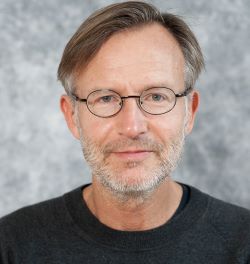
Henrik Lindblad, PhD, is an art historian and researcher affiliated with the Department of Art History at Uppsala University. He currently works as a heritage consultant, undertaking assignments for the Church of Sweden and other organisations. Previously, he worked as a conservation officer, investigator and coordinator at the Swedish National Heritage Board (2003–2007); as a project leader, coordinator and strategist at the Church of Sweden’s Central Office (2007–2017); and as a heritage officer at the Diocese of Lund (2017–2021). For several years, he was involved in the research project Old Churches – New Values, led by the University of Gothenburg. The project resulted in the research report Religious Buildings in Transition (2016) and the anthology Alla dessa kyrkor (All These Churches, 2017). He is a founding member of the European organisation Future for Religious Heritage (FRH) and a member and former chair of its Scientific Advisory Committee. He is also a founding member and former vice-president of ICOMOS’s International Scientific Committee on Places of Religion and Ritual (PRERICO). In this capacity, he has carried out several reviews of UNESCO World Heritage nominations. Through his professional and academic career, he has contributed numerous articles on religious heritage to national and international publications. His doctoral thesis, Kyrkliga kulturarv i en ny tid – Samlade studier och reflektioner (Ecclesiastical Heritage in a New Era – Collected Studies and Reflections), was defended at Uppsala University in 2023. Recent publications include “Sacred Sites, Abandoned Abbeys: Sustainable Heritage Tourism in Southern Sweden” (with Johan Eriksson and Christer Gustafsson), in Catarina Almeida Marado et al. (eds.), (Re)interpretations of Female Conventual Heritage: Spaces, Memories and Reuses (2025); and “Towards a Sustainable Future for Ecclesiastical Heritage”, in Rolando Volzone, João Luís Fontes and Henrik Lindblad (eds.), Religious Heritage: Sites, People, Challenges, published in CIDADES, Comunidades e Territórios (2025).
In a forthcoming publication, which he is co-editing in collaboration with the Church of Sweden’s Research Unit, he further defines and explores the emerging research field of Dark and Complex Church Heritage.
SOFIA NIVARTI, University of Cambridge, United Kingdom
BIO:
Dr Sofia Nivarti is an Associate Professor of Architecture at the University of Cambridge. A native of Jyväskylä, Finland, she trained as an architect at the University of Cambridge in the UK and the Yale School of Architecture in the US. She undertook a PhD in architectural history back at Cambridge, authoring a thesis on the religious architecture of the Alvar Aalto atelier. At Yale, she held the Edward P. Bass Scholarship in Architecture, and at Cambridge, a Gates Cambridge PhD Scholarship.
Dr Nivarti’s specialism is modern architecture. Her main expertise is in the critical analysis of the architecture, urbanism, design and thought of Finnish modernists Alvar, Aino and Elissa Aalto and their associates. Her other research interests lie in the histories and theories of modern architecture, Indigenous architectures, and architectural criticism.
Her first monograph, The Religious Architecture of Alvar, Aino and Elissa Aalto was published by Lund Humphries in 2023. It offered the first comprehensive analysis of the Aaltos’ sacred architecture, with a particular emphasis on their post-war churches in Finland, Germany and Italy. Her second monograph addresses the post-construction reception and significance of the Aaltos’ work and thought broadly understood. Studio Aalto: The Modern Legacy of Alvar, Aino and Elissa Aalto is published by Yale University Press in 2026.
MATTHIEU SOMON, UCLouvain, Belgium
https://orcid.org/0009-0004-6437-1377
BIO:
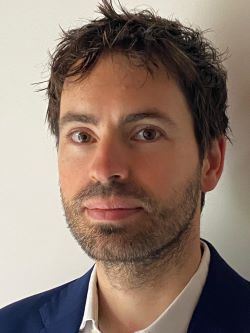
Matthieu Somon, who holds a Ph.D. in art history, has been the head of the Arts & Religions Chair at UCLouvain since 2022. He has taught modern art history at the University of Paris 1 Panthéon-Sorbonne, the Catholic University of the West (UCO Angers), the University of Fribourg (Switzerland), and UCLouvain. He is the author of a monograph on early modern representations of the story of Moses—that is, its reinventions by and for Catholic and Protestant circles in the Kingdom of France. His book was published by Peeters Publishers in 2025 as part of the “Art & Religion” series and is titled Imaginer Moïse à l’âge moderne en France (XVIe-XVIIIe siècles). His research is guided by the materiality of the arts, as it allows for a deeper grasp and renewed understanding of the Abrahamic monotheistic religions. His work stems from a particular interest in Jewish, Christian, and Islamic iconography. Unreducible to discourse, works of art and images embrace, process, and reveal what texts cannot verbalize, and shed light on a facet of the religious imagination that complements that established by theological writings. Adopting an interdisciplinary approach, his research practices a form of art history that draws on methods and theoretical tools from theology, exegesis, anthropology, aesthetics, history, and the history and religious studies. His research aims to explore the religious imagination of the three Abrahamic monotheistic religions (Judaism, Christianity, and Islam) and to highlight the ways in which the arts have formulated original interpretations of these three major traditions that are not encompassed by written exegesis. His research areas cover the material history of religions and their contribution to the history of religious imaginaires (including processional objects, nativity scenes, pendants, reliquaries and tabernacles, chalices, and liturgical textiles), figurative translations of negative theology, aniconism, iconoclasm, comparative studies, and interreligious imagery (particularly through architecture and the iconographic motif of the Temple of Jerusalem, and through Myriam/Marie/Maryam, Jesus/Jeshuah/Isa, and Moshè/Moïse/Moussa as interreligious figures). The construction of religious imaginaires, the historicization of religions, the iconography of the sacraments, Protestant art in France prior to the revocation of the Edict of Nantes, Jean Siméon Chardin, vanitas and secular still lifes, the iconography of musical instruments, and the critical function of art in relation to religions also feature among his fields of investigation. Alongside this academic research and teaching, his scholarly activities have also extended to museums and the press, in the form of lectures and trips (notably for Le Monde de la Bible and La Croix), as well as exhibitions he has curated: “Moïse, figures d’un prophète” (“Moses, figures of a prophet”) in 2015 at the Jewish Museum in Paris (MAHJ, musée d’art et d’histoire du judaïsme), “Formes du salut” (“Form of Salvation”) at the Musée L in 2022, and “History, Aesthetics, and Communities. Exploring the Spaces of Christian Worship in Belgium”, at the Chapel for Europe (Brussels) in 2025. He is currently preparing an exhibition focused on the painter Philippe de Champaigne (1604–1676) at the Royal Museums of Fine Arts of Belgium with Lara de Merode.
LANGUAGE EDITING
Agnieszka Iwaszek, Msc - University of Rzeszów, Rzeszów, Poland, sacrumetdecorum@ur.edu.pl
Elżbieta Kot, Msc - Rzeszów University Press, Rzeszów, Poland, e.kot@ur.edu.pl
Ian Upchurch, Msc - University of Rzeszow, Rzeszów, Poland, iupchurch@ur.edu.pl
TRANSLATION
Dr hab. AGNIESZKA GICALA, University of the Commission of National Education in Krakow, Poland, agnieszka.gicala@uken.krakow.pl
Dr hab. MONIKA MAZUREK, University of the Commission of National Education in Krakow, Poland, monika.mazurek@uken.krakow.pl
WEBSITE EDITING
Agnieszka Iwaszek, Msc - University of Rzeszów, Rzeszów, Poland, sacrumetdecorum@ur.edu.pl
GRAPHIC DESIGN
Piotr Bigaj, Krzysztof Marciniak, Aleksander Rusin, Piotr Wisłocki
OJS (Open Journal System) ADMINISTRATOR
Magdalena Michniewicz, Msc – phone: +48 505 162 906, mmichniewicz@ur.edu.pl
Editorial address
‘Sacrum et Decorum’
University of Rzeszów
35-315 Rzeszów, Al. mjr. Wacława Kopisto 2A, room 210, Poland
tel.: +48 17 872 12 58, +48 661 928 362 (editor-in-chief)
e-mail: sacrumetdecorum@ur.edu.pl, gryba@ur.edu.pl (editor-in-chief)