Kim Ki’chang i zachodnia estetyka sztuki religijnej
DOI:
https://doi.org/10.15584/setde.2026.19.4Słowa kluczowe:
Unbo, sztuka koreańska w XX wieku, estetyka, Hans von Balthasar, André MalrauxAbstrakt
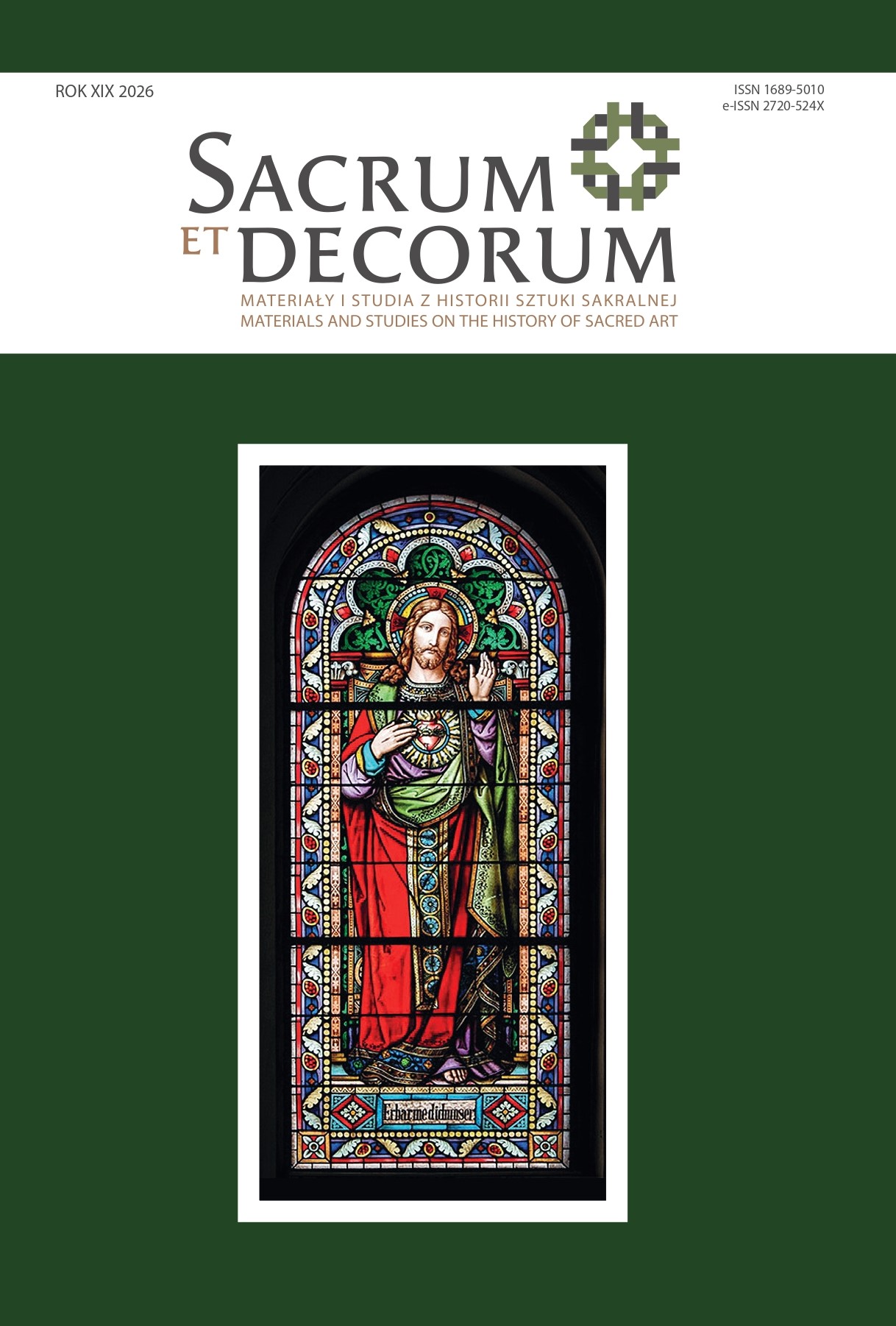
Koreańskiego artystę Kim Ki’changa (1914–2001) i jego twórczość można rozpatrywać w kontekście międzykulturowej wymiany między Wschodem a Zachodem. W tym nurcie niniejszy artykuł analizuje cykl obrazów tego artysty zatytułowany Życie Jezusa jako przykład sztuki wschodniej, którą można z powodzeniem interpretować w odwołaniu do różnych koncepcji zachodniej tradycji filozoficznej. Artykuł zadaje pytanie, w jakim stopniu dzieła sztuki religijnej Kim Ki’changa odnoszą się do takich pojęć, jak sakralność, wiara, wiedza, człowieczeństwo i piękno. Analiza rozpoczyna się od usytuowania Życia Jezusa w kanonie historii sztuki. Następnie sięga do różnych koncepcji religijnych i teoretycznych, aby zrozumieć, w jaki sposób idee te przenikają obrazy wchodzące w skład serii, jak i cały cykl. Esej kończy się refleksją na temat tego, w jaki sposób ich estetyczne oddziaływanie odnosi się do nieustannego dążenia ludzkości do zrozumienia siebie poprzez boskie objawienie.
Downloads
Bibliografia
Alloway, Lawrence and Newman, Barnett. Barnett Newman: The Stations of the Cross: Lema Sabachthani. Solomon R. Guggenheim Foundation, 1966.
Amishai-Maisels, Ziva. “Chagall’s White Crucifixion.” Art Institute of Chicago Museum Studies 17, no. 2 (1991): 151-2. https://doi.org/10.2307/4101588.
Beyers, Jaco and Kriel, Lize. “John Muafangejo’s How God Loves His People All Over the World as Material Religion”. Religion & the Arts 24, no. 4 (2020): 386; 392. https://doi-org.ezproxy3.library.arizona.edu/10.1163/15685292-02404002.
Berger, Peter L. A Rumor of Angels: Modern Society and the Rediscovery of the Supernatural. Doubleday, 1969.
Berger, Peter L. The Sacred Canopy: Elements of a Sociological Theory of Religion. Anchor Books, 1967.
Bryan, Rennie, ed. Mircea Eliade: A Critical Reader. Equinox Publishing, 2006.
Choi, Byung-sik. “A Retrospective Exhibition of Korea’s Monumental Artist Kim Ki-Chang.” Koreana 14 (3): 84. EBSCOhost. Autumn 2000.
Chung, Hye-jean. “Artistic World of Kim Ki-Chang.” Korea Times (English Edition; Los Angeles) 10, no. 3, 2001.
Eliade, Mircea. The Sacred and the Profane: The Nature of Religion. Brace and World, 1959.
Fantham, Elaine. Ovid’s Metamorphoses. Oxford University Press, 2023. doi.org/10.1093/oso/9780195154092.001.0001.
Gordon, Robert E. “Kim Ki-chang: A Korean Caravaggio? Empathy and Intuition in The Life of Jesus Series.” Catholic Arts Today, March 2018, Benedict XVI Institute.
Gordon, Robert E. “The Philosophy of Freedom and the History of Art: An Interdisciplinary View”. Philosophies (5):3. DOI: 10.3390/philosophies5030018.
Johnson, Jennifer. Georges Rouault and Material Imagining. Bloomsbury Visual Arts, 2020. https://doi.org/10.5040/9781501346125.
Kant, Immanuel and Bernard, J.H. Kant’s Critique of Judgement. Macmillan, 1914.
Kim, Ki’chang. The Life of Jesus: A Collection of Sacred Paintings by Kim Ki-Chang. Israel Cultural Institute, 1984.
Kim, Yisoon. “The Artistic World of Unbo Kim Kich’ang (1914–2001) and the Life of Jesus Series: Tradition, Modernity, and Faith in Korean Painting.” Sacrum et Decorum 18 (2025): 85-122. https://doi.org/10.15584/setde.2025.18.4.
Kohan, John A. “Profound Faith, Profound Beauty: The Life and Art of Sadao Watanabe”. Image: Art, Faith, Mystery 74 (June 2012): 30.
Kristeller, Paul Oskar. “Introduction,” in: Aesthetics: A Comprehensive Anthology, Steven M. Cahn and Aaron Meskin, eds. Blackwell Publishing, 2008.
Ladd, Stephanie Gehring. “Miserere et Guerre.” Art & Christianity 90 (June 2017): 8.
Lewis-Williams, David. The Mind in the Cave: Consciousness and the Origins of Art. Thames & Hudson, 2004.
Male, Emile. The Gothic Image: Religious Art In France Of The Thirteenth Century. Oxfordshire: Routledge, 2018.
Malraux, André. The Voices of Silence. Trans. Stuart Gilbert. Secker & Warburg, 1954.
Morgan, David. The Sacred Gaze: Religious Visual Culture in Theory and Practice. University of California Press, 2005.
Pageau, Jonathan. “The Mystery of Ethiopian Iconography.” Orthodox Art Journal, August 10, 2012.
Plantinga, Alvin. God, Freedom, and Evil. Grand Rapids, MI: William B. Eerdmans Publishing Co., c1977.
Scruton, Roger. Beauty. Oxford University Press, 2009.
Soltes, Ori Z. Our Sacred Signs: How Jewish, Christian, and Muslim Art Draw from the Same Source. Westview Press, 2005.
Sweeney, James J. Marc Chagall. Museum of Modern Art, 1946.
von Balthasar, Hans Urs. The Glory of the Lord: A Theological Aesthetics, Vol. 2: Studies in Theological Style: Clerical Styles. Trans. T&T Clark Ltd. Ignatius Press, 1984.
Zhang, Xinyi. “The Indigenization Strategies of Catholic Painting in Early 20th Century China.” Religions 15, no. 6 (2024): 681. https://doi.org/10.3390/rel15060681.
Pobrania
Opublikowane
Jak cytować
Numer
Dział
Licencja
Prawa autorskie (c) 2026 Robert E. Gordon

Utwór dostępny jest na licencji Creative Commons Uznanie autorstwa 4.0 Międzynarodowe.
Zgodnie z polityką Open Access autorzy zachowują pełnię praw autorskich do swoich artykułów – bez ograniczeń.
Autorzy mogą deponować swoje artykuły w wybranym przez siebie repozytorium.